

PUK President: There is Prejudice in Service Provision
P.U.K 10:28 AM - 2024-03-16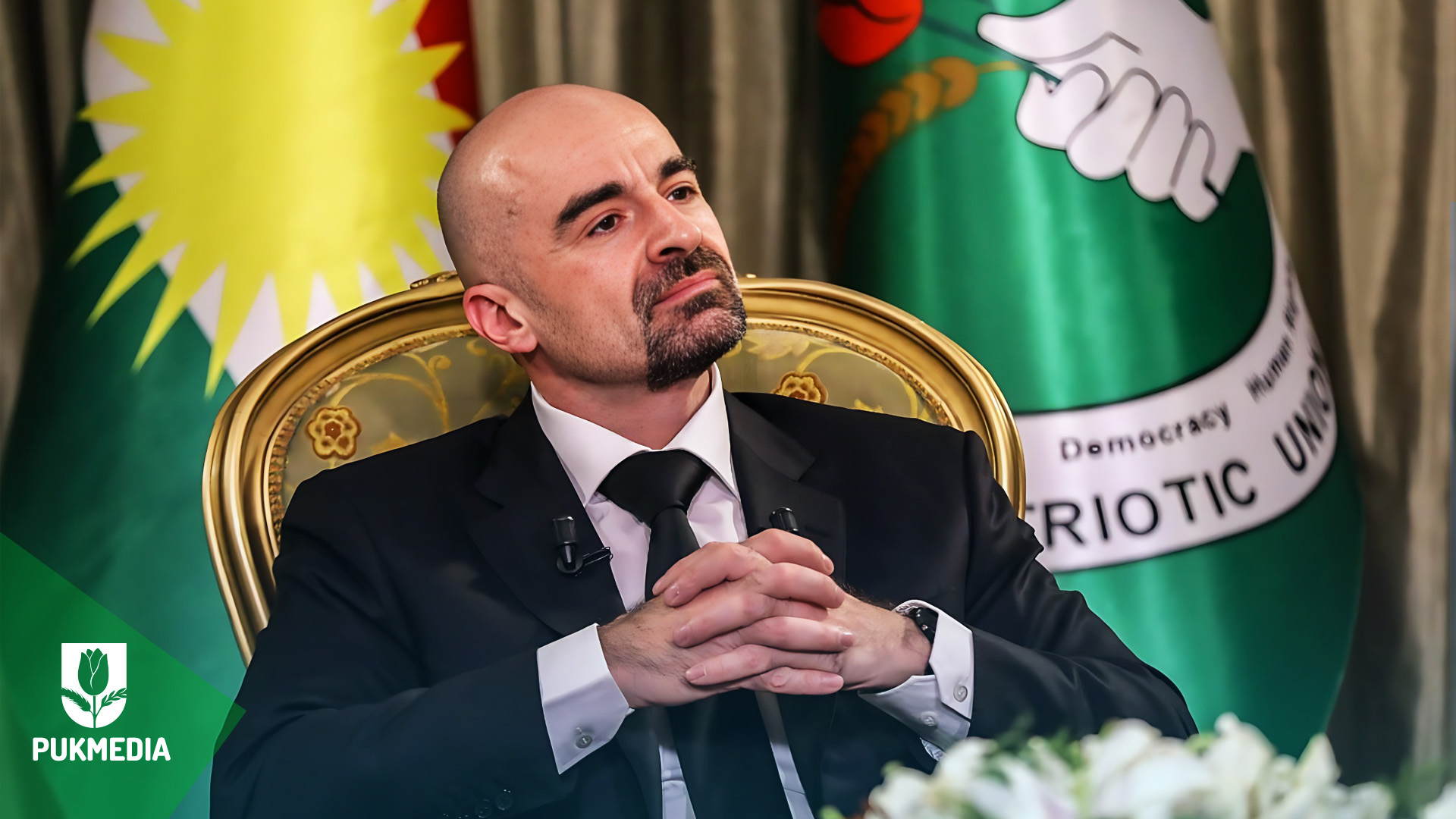 PUKMEDIA
PUK President Bafel Jalal Talabani with Kurdistan and PUK flags in the background.
On the anniversary of the Halabja chemical attack, Bafel Jalal Talabani, President of the Patriotic Union of Kurdistan (PUK), published a message in which he stated that while we observe the remembrance of this significant atrocity today, there is a notable lack of adequate services and a prevalence of prejudice in their provision, and that what is offered to Halabja and its esteemed people is confined to mere rhetoric and unkept pledges.
PUK President's message for the anniversary of Halabja chemical attack said:
"Today and every day of our lives, we honour and remember the martyrs of the Halabja genocide and pay tribute to the courageous resistance of their proud families.
Regrettably, while we observe the remembrance of this significant atrocity today, there is a notable lack of adequate services and a prevalence of prejudice in their provision. What is offered to Halabja and its esteemed people is confined to mere rhetoric and unkept pledges. The calamity that occurred in the city should have served as a significant historical lesson for us Kurds. We should have collaborated in a unified and responsible sense to revive optimism and construct a more prosperous and secure future.
It is evident that the people of Halabja and the entire Kurdistan region require a focus on broader objectives rather than narrow political agendas and personal ambitions. What is needed is a commitment to address and advocate for their rightful demands. It is essential to prioritise duty and obligation towards the land and nation over any form of prejudiced mindset and ensure that services are accessible to all individuals without any discrimination. Kurdistan requires unity and solidarity, rather than division and detachment. We must utilise our divergences to serve shared objectives and bear in mind that, as Kurds, we share the same destiny."
Note* On March 16, 1988, the warplanes of Iraq's previous Ba'ath regime, led by dictator Saddam Hussein, dropped a deadly mixture of chemical weapons on the city of Halabja. This attack resulted in the deaths of at least 5,000 individuals, predominantly women and children, and caused injuries to hundreds of others. The Halabja chemical attack, officially acknowledged as an act of genocide by Iraq's High Court in 2010, has indelibly marked the collective memory of the Kurdish people. The attack was a component of a broader Anfal genocide operation, which resulted in the deaths of more than 182,000 Kurds under the rule of the Baathist state.
PUKMEDIA
More news
-
Navi Pillay Wins 2026 Nobel Peace Prize
01:53 PM - 2026-10-09 -
Shipping Traffic Through Strait of Hormuz Falls to Lowest Level in More Than Two Months
01:57 PM - 2026-10-08 -
Oil Prices Rise Above $102 as Middle East Supply Concerns Persist
09:45 AM - 2026-10-08 -
Iraqi Airways Carries More Than 271,000 Passengers in September
08:17 PM - 2026-10-07
see more


Sheikh Mahmud Hafid: A Legacy of Kurdish Nationalism
12:03 PM - 2026-10-09

Oil Prices Decline as US–Iran Talks Show Progress
09:25 AM - 2026-10-09

Iraqi Prime Minister: Borrowing Would Have Increased Iraq’s Debt Burden
09:05 PM - 2026-10-08

Iraqi Embassy Works to Identify 18 Bodies Recovered off Libya
05:56 PM - 2026-10-08
Most read
-
Iraqi Prime Minister: Borrowing Would Have Increased Iraq’s Debt Burden
Iraq 09:05 PM - 2026-10-08 -
Oil Prices Decline as US–Iran Talks Show Progress
News 09:25 AM - 2026-10-09 -
Sheikh Mahmud Hafid: A Legacy of Kurdish Nationalism
Kurdistan 12:03 PM - 2026-10-09 -
Navi Pillay Wins 2026 Nobel Peace Prize
World 01:53 PM - 2026-10-09 -
Pentagon Plans to Livestream Nidal Hasan’s Execution in December
World 06:01 PM - 2026-10-09
The News in your pocket
Download
 Application