
Wahid: An Eyewitness of Anfal Genocidal Crimes
Genocide 03:49 PM - 2021-11-01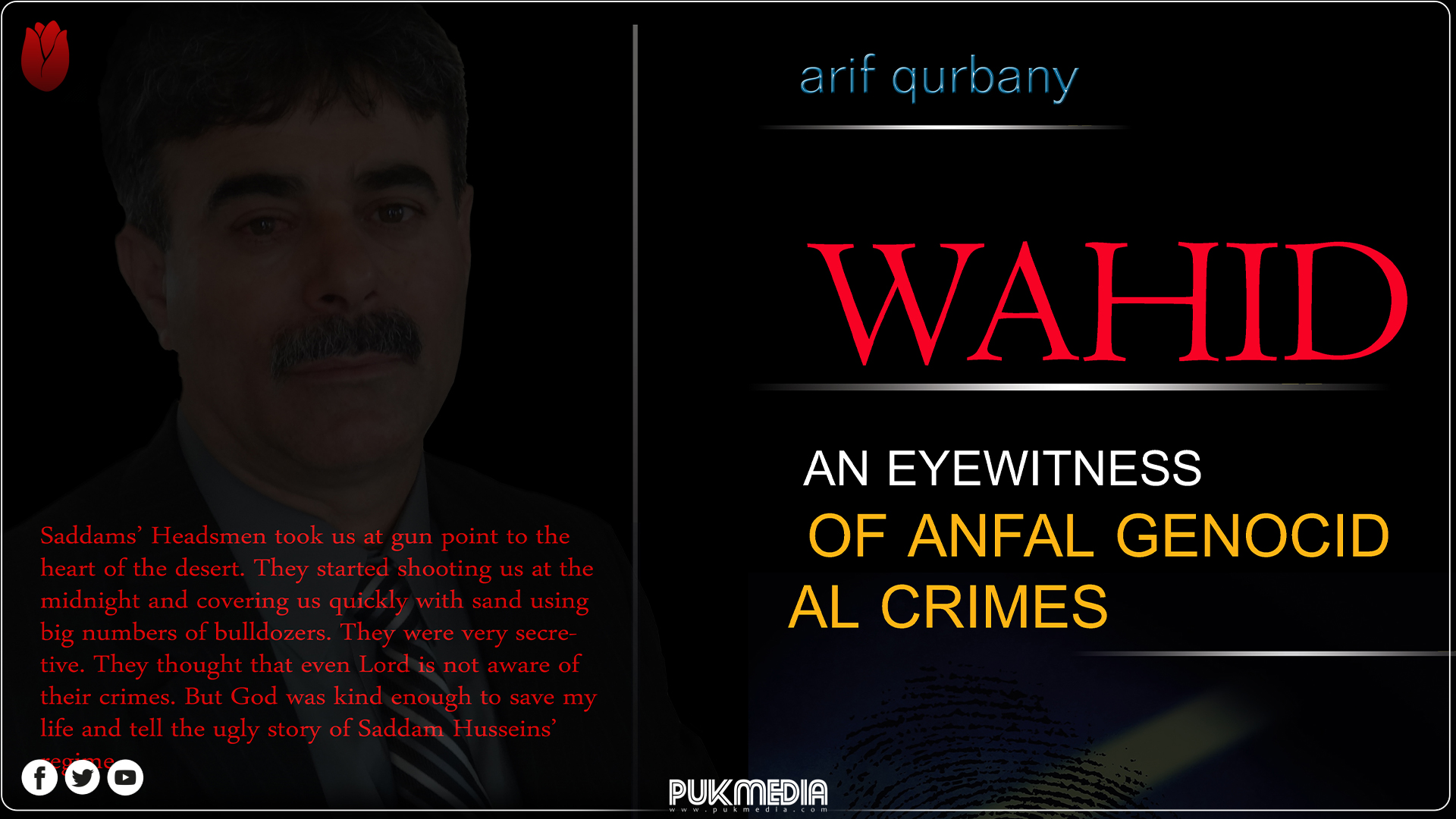
'Wahid: An Eyewitness of Anfal Genocidal Crimes' is one of the Kurdish writer Arif Qurbany's collection of books on the genocide of the Kurds by the notorious Baath regime.
The book has been translated to English by the Kurdish writer and academic Abdulkarim Uzeri.
On his journey to look for information, documents, and evidence to write his book on the Anfal Campaign, Arif Qurbany came across a man who has witnessed almost all the atrocities that happened to the Kurds.
The man's name is Wahid Muhammad Kochani. Kochani is the eye-witness and the survivor of Anfal genocidal crimes committed against the Kurds.
Kochani, along with the other survivals of the mass graves, was taken to the United States. During the Anfal campaign, Kochani was taken from his remote village in the south of Chamchamal city to a concentration camp called Topzawa not very far from the oil-rich city of Kirkuk, he saw tens of thousands of Kurdish children, women and men gathered at gun point in that horrible camp. Within hours males aged from 15 to 70 years were separated, put into sealed transporters and taken to the firing squad fields of Ar-Ar desert west of the capital Baghdad.
The Anfal victims were taken in special transporters without ventilation or a drop of water to drink. Although the trip took about twelve hours but there was no access to the rest room at all. And when they arrived the death pits the systematic shooting started and the only way for victims to survive was to attack the headsmen with their bare hands taking the last chance to stay alive. Most of the survivals could save their lives by executing such heroic challenges against armed men of the Iraqi regime, including our hero Wahid Muhammad.
The Baath regime's campaigns against the Kurdish people were numerous and included a wide range of crimes.
The campaigns started with the Arabization of inhabited areas in the southern part of Kurdistan including Kirkuk city and several towns like Khanaqin, Makhmur, and Shengal. The original Kurdish inhabitants were forced out of their homes without being allowed to take their basic necessities, while the Arabs who occupied these houses received them for free, over and above the fact that they had already been given cash as an inducement to reside in Kurdistan.
In 1983, eight thousand young men were rounded up at gunpoint and taken to some unknown destinations in the south of Iraq. Thereafter, they all disappeared, and even foreign diplomatic efforts have failed to trace a single person.
Reports from Iraqi military sources indicate that they were used as guinea pigs to test the effects of various chemical agents.
Another horrific feature of the Iraqi campaign was the regime's resorting to chemical weapons against civilian populations!
On April 16, 1987, a chemical attack on the Balisan valley near Erbil killed dozens of civilians. On March 16, 1988, a sustained chemical attack was launched on Halabja, where roughly 5 thousand civilians died and many more thousands were seriously injured.
The largest genocide committed against the Iraqi Kurds by Saddam Hussein's regime was in 1988 which was one of the most systematic mass killings.
Although 182,000 victims have been documented, there are tens of thousands of victims who have not been recorded: the unnamed newborn infants, the unborn children of pregnant mothers, the many people who were shot and killed by the infantry and the air force as they escaped on foot and those who died by starvation and diseases.
The author dedicated his book to Peter Galbraith who made Americans aware of genocides against Kurds.
Tap here to read the full book...
PUKmedia
More news
-
Navi Pillay Wins 2026 Nobel Peace Prize
01:53 PM - 2026-10-09 -
Shipping Traffic Through Strait of Hormuz Falls to Lowest Level in More Than Two Months
01:57 PM - 2026-10-08 -
Oil Prices Rise Above $102 as Middle East Supply Concerns Persist
09:45 AM - 2026-10-08 -
Iraqi Airways Carries More Than 271,000 Passengers in September
08:17 PM - 2026-10-07
see more


Sheikh Mahmud Hafid: A Legacy of Kurdish Nationalism
12:03 PM - 2026-10-09

Oil Prices Decline as US–Iran Talks Show Progress
09:25 AM - 2026-10-09

Iraqi Prime Minister: Borrowing Would Have Increased Iraq’s Debt Burden
09:05 PM - 2026-10-08

Iraqi Embassy Works to Identify 18 Bodies Recovered off Libya
05:56 PM - 2026-10-08
Most read
-
Iraqi Prime Minister: Borrowing Would Have Increased Iraq’s Debt Burden
Iraq 09:05 PM - 2026-10-08 -
Oil Prices Decline as US–Iran Talks Show Progress
News 09:25 AM - 2026-10-09 -
Sheikh Mahmud Hafid: A Legacy of Kurdish Nationalism
Kurdistan 12:03 PM - 2026-10-09 -
Navi Pillay Wins 2026 Nobel Peace Prize
World 01:53 PM - 2026-10-09 -
Pentagon Plans to Livestream Nidal Hasan’s Execution in December
World 06:01 PM - 2026-10-09
The News in your pocket
Download
 Application